Patient Story - Terisa Monroe
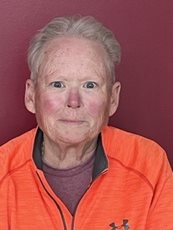 A lifelong resident of Licking County, Terisa Monroe grew up in Heath with her eight siblings. Her parents fostered children and adopted her and three other children. The large family, that now includes numerous nieces, nephews, grandnieces, and grandnephews, have been a source of support and comfort in the past few years as Terisa has worked to recover from a series of strokes.
Terisa’s journey began in October 2024. She and her partner had spent the day in a car driving home from a vacation. They stopped to eat when Terisa noticed her arm was numb. Too tired to worry about the numbness and not experiencing any other symptoms, Terisa waited until the next morning to visit the Licking Memorial Hospital Emergency Department (ED). After a number of tests, Terisa was told that she had experienced a stroke. The staff then performed a bubble study to track the flow of blood to the heart to determine if she had a blocked artery. During the exam, a mixture of sterile saline and a small amount of air is shaken to create bubbles then injected into a vein. Staff then perform an echocardiogram to watch the bubbles circulate through the heart. This type of diagnostic testing is often utilized on people who experience an unexpected stroke but have no obvious stroke risk factors, such as high blood pressure or atrial fibrillation. The results can provide clues about a possible cause and assist in determining treatment.
After determining that the cause of the stroke was not due to issues with her heart, the staff decided to prescribe anti-platelet medication, or blood thinners, to prevent unwanted clots. Terisa was released and resumed her daily activities. In February 2025, Terisa was having difficulty speaking and went to the ED immediately. After testing and scans, the staff confirmed Terisa had experienced a second stroke. Again, no cause was found and she was advised to continue her anti-platelet medication.
Terisa then experienced a third stroke a few months later. Numerous blood tests were performed and staff members were able to determine the cause of Terisa’s strokes. They determined that Terisa has a protein C deficiency, a disorder that increases the risk of developing abnormal blood clots. Protein C is one of many natural anticoagulants in blood that prevents blood from clotting. Blood naturally needs to clot to stop internal bleeding. Without enough protein C in a person’s system, an excessive amount of clotting may occur leading to life-threatening issues including stroke, deep vein thrombosis, and pulmonary embolism. Protein C deficiency is typically inherited and caused by a gene mutation.
“Once they determined I had protein C deficiency, my medications were completely changed,” Terisa shared. “I have not experienced an episode since and I am able to participate in the activities I enjoy most including golf and mowing my yard. I really love the look of a freshly mowed lawn. I also like staying active. I visit the YMCA two to three times a week and ride my bicycle around the neighborhood when the weather is nice.”
The staff at Licking Memorial Neurology, including Neurologist Gloria M. Galloway, M.D., worked with Terisa to manage her symptoms. She now takes an anticoagulant medication that prevents and treats dangerous blood clots. In November, Dr. Galloway noted that Terisa was doing very well on her current medications and released Terisa from her care. Now, Terisa just visits her primary care physician for check-ups.
| Posted On : 8/6/2026 12:52:52 PM