Lung Cancer Screening and Prevention
 Lung cancer is the second most common cancer in men and women in the United States and is the leading cause of cancer deaths. Each year, more people die of lung cancer than of colon, breast, and prostate cancer combined. The rate of new lung cancer cases in Ohio is significantly higher than the national average. In Licking County, lung cancer was the leading cause of cancer incidence, accounting for nearly 16 percent of cancer cases from 2016 to 2020.
Lung cancer is difficult to detect early because most people do not exhibit symptoms until the cancer is at an advanced stage and has spread to other areas of the body. Symptoms that are present in the early stages of lung cancer are often mistaken for other health issues, such as infection or long-term effects from smoking. Symptoms of lung cancer can vary between people and may include coughing that worsens or does not go away, chest pain, shortness of breath, hoarseness, chronic bronchitis, and unexpected weight loss. Regular cancer screenings remain the best tools for early detection and treatment.
Risk factors for lung cancer include smoking, secondhand smoke, exposure to radon and other cancer-causing agents, air pollution, and personal or family history of the disease. Individuals can reduce their risk of lung cancer by quitting smoking and avoiding secondhand smoke. Smoking is the number one risk factor for lung cancer and is estimated to account for approximately 90 percent of all cases. The LMH Tobacco Cessation Program, Quit for Your Health, is designed to help people stop using tobacco. Using evidence-based techniques, a Certified Tobacco Treatment Specialist, will work with participants to develop a plan that will provide an opportunity to become tobacco-free and reduce the chances of developing cancer. Individuals may enroll in the program through either a physician or self-referral. For more information, call (220) 564-QUIT (7848).
Radon is the second leading cause of lung cancer. Licking County has the highest levels of indoor radon in Ohio. Homes should be tested and treated to reduce radon levels and exposure. Free radon test kits are available and may be ordered online at the Ohio Department of Health (ODH) website, ohio.radon.com. The Licking County Health Department (LCHD) recommends that all residents test their homes for radon. LCHD also provides radon education and awareness through a grant from the EPA, administered by ODH. Individuals may call (740) 349-1562 for more information.
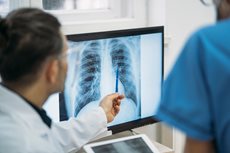
Individuals who are concerned about their lung cancer risk should consult with their physician. There are a variety of tests and procedures that are used to diagnose lung cancer. Imaging tests, such as X-ray, computed tomography (CT), and positron emission tomography (PET) scans, can reveal abnormal masses, nodules, and small lesions. A biopsy can also be performed using a bronchoscopy or endobronchial ultrasound (EBUS) procedure.
Licking Memorial Hospital (LMH) offers lung cancer screenings using low dose computed tomography (LDCT) scans to individuals who meet certain criteria. The American Cancer Society recommends screening for individuals who are between the ages of 50 and 80, show no signs or symptoms of lung cancer, currently smoke or quit smoking within the last 15 years, and have a tobacco smoking history of at least 20 pack years. A pack-year is the equivalent of smoking one pack of cigarettes, or about 20 cigarettes per day, for one year. The scan takes about five minutes and provides an overview of the lung using the lowest radiation dose possible to detect lung nodules. Nodules are common and most are noncancerous; however, a nodule can represent early lung cancer.
Diagnosing and staging lung cancer requires expertise from a medical specialist and numerous tests. The process can take time, which may cause patients to feel overwhelmed, anxious, and scared. LMH employs a lung cancer nurse navigator to assist in bridging the gap between diagnosis and treatment. The lung cancer nurse navigator is a clinically trained individual responsible for guiding the patient through the cancer care continuum while identifying and addressing any barriers, such as difficulty coordinating care, lack of health insurance coverage, financial challenges, lack of caregiver support, and language barriers
| Posted On : 11/14/2025 11:34:30 AM